Loading...

Image Alt

Our Founder

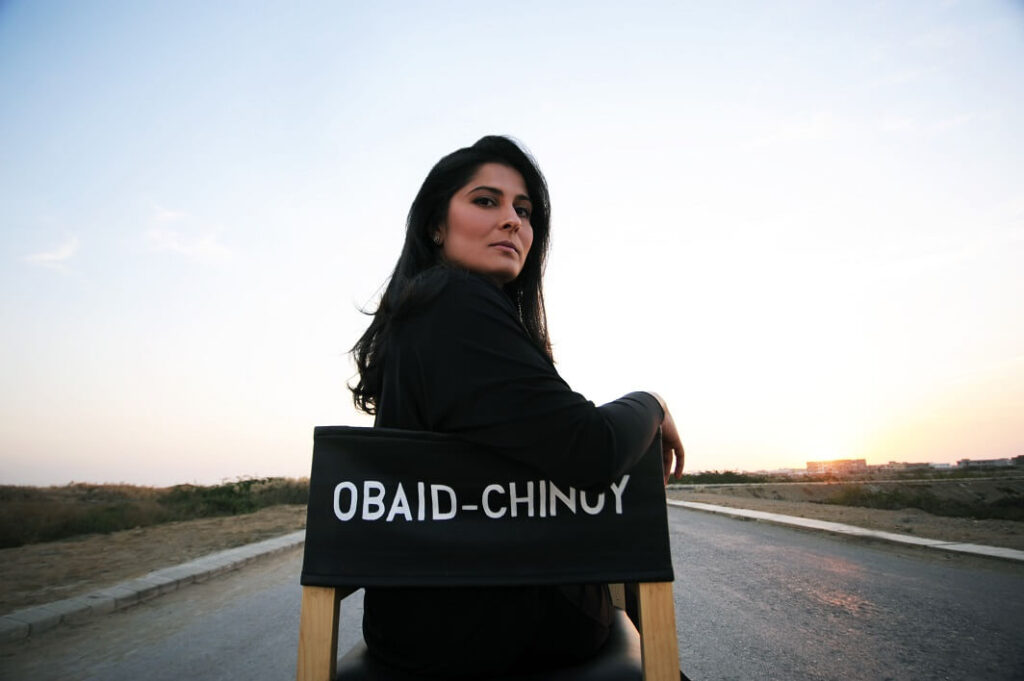
SHARMEEN OBAID-CHINOY

Sharmeen Obaid-Chinoy is a two-time Academy Award-winning filmmaker and institution-builder whose work spans storytelling, advocacy, education and cultural preservation. For more than two decades, she has worked across countries, cultures and communities, using film not only to document the world around her, but to question it  and increasingly, to build the platforms and institutions that can help shape what comes next.

Her work has earned two Academy Awards, multiple Emmy Awards and recognition around the world. She has been named one of TIME magazine’s 100 most influential people, received Pakistan’s Hilal-e-Imtiaz, and been recognized by the World Economic Forum with its Crystal Award and by the International Center for Journalists with the Knight International Journalism Award.

At the heart of Sharmeen’s work is a persistent curiosity about power and possibility. Who gets heard? Who has access to information? Whose experiences become part of our collective memory? Who knows what choices are available to them? And what happens when people are given the knowledge and opportunity to question what they have been taught to accept?

For Sharmeen, a story does not end when the screen goes dark. Her films have brought issues including honour killings, acid violence and discrimination against minorities into public conversation, while the work around them has extended into advocacy, education and engagement with institutions and policymakers. A Girl in the River: The Price of Forgiveness became part of a national conversation around honour killings as Pakistan moved to close the legal loophole that allowed perpetrators to escape punishment through familial forgiveness. Saving Face brought global attention to acid violence and greater visibility to the movement for legal protection and support for survivors.

Over time, Sharmeen has moved from telling stories to building platforms that enable others to tell their own.

As co-founder of the Citizens Archive of Pakistan, she helped build an institution dedicated to preserving the country’s oral histories and making its history accessible to new generations. Through Patakha Pictures, she has created pathways for emerging filmmakers to access funding, mentorship, skills and professional networks. With Neela Asmaan, she has created a multidisciplinary residency in the Shigar Valley where artists and thinkers from Pakistan and around the world can experiment, exchange ideas and create.

That same philosophy is driving the evolution of SOC Films. What began as a filmmaking practice has grown into a platform that creates, educates and builds, producing fiction and non-fiction for audiences around the world while expanding access to information, developing new generations of storytellers and connecting communities with institutions and decision-makers. Through its AI Lab, SOC Films is also exploring how emerging technologies can reshape how stories are created, experienced and shared.

Sharmeen’s own creative practice continues to evolve, moving between documentary and fiction, Pakistan and the international stage. For her, filmmaking, advocacy, education and institution-building are different expressions of the same idea: stories matter because they shape what we see, what we question and what we believe is possible.

And when stories create knowledge, conversation and opportunity, they can become the beginning of something much bigger.

Sharmeen Obaid-Chinoy is a two-time Academy Award-winning filmmaker and institution-builder whose work spans storytelling, advocacy, education and cultural preservation. For more than two decades, she has worked across countries, cultures and communities, using film not only to document the world around her, but to question it and increasingly, to build the platforms and institutions that can help shape what comes next. Her work has earned two Academy Awards, multiple Emmy Awards and recognition around the world. She has been named one of TIME magazine’s 100 most influential people, received Pakistan’s Hilal-e-Imtiaz, and been recognized by the World Economic Forum with its Crystal Award and by the International Center for Journalists with the Knight International Journalism Award. At the heart of Sharmeen’s work is a persistent curiosity about power and possibility. Who gets heard? Who has access to information? Whose experiences become part of our collective memory? Who knows what choices are available to them? And what happens when people are given the knowledge and opportunity to question what they have been taught to accept? For Sharmeen, a story does not end when the screen goes dark. Her films have brought issues including honour killings, acid violence and discrimination against minorities into public conversation, while the work around them has extended into advocacy, education and engagement with institutions and policymakers. A Girl in the River: The Price of Forgiveness became part of a national conversation around honour killings as Pakistan moved to close the legal loophole that allowed perpetrators to escape punishment through familial forgiveness. Saving Face brought global attention to acid violence and greater visibility to the movement for legal protection and support for survivors. Over time, Sharmeen has moved from telling stories to building platforms that enable others to tell their own. As co-founder of the Citizens Archive of Pakistan, she helped build an institution dedicated to preserving the country’s oral histories and making its history accessible to new generations. Through Patakha Pictures, she has created pathways for emerging filmmakers to access funding, mentorship, skills and professional networks. With Neela Asmaan, she has created a multidisciplinary residency in the Shigar Valley where artists and thinkers from Pakistan and around the world can experiment, exchange ideas and create. That same philosophy is driving the evolution of SOC Films. What began as a filmmaking practice has grown into a platform that creates, educates and builds, producing fiction and non-fiction for audiences around the world while expanding access to information, developing new generations of storytellers and connecting communities with institutions and