SHARMEEN OBAID-CHINOY
Founder, SOC Films
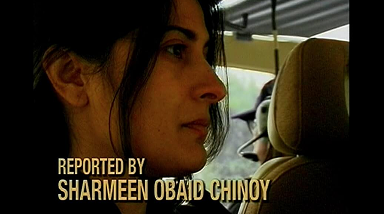
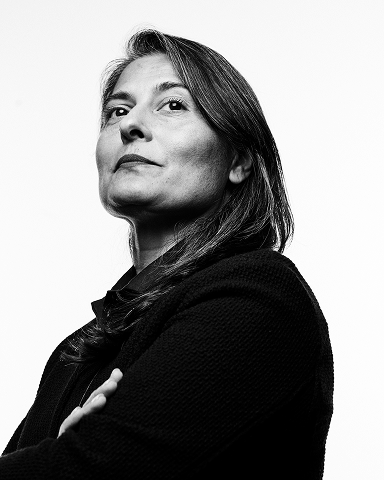
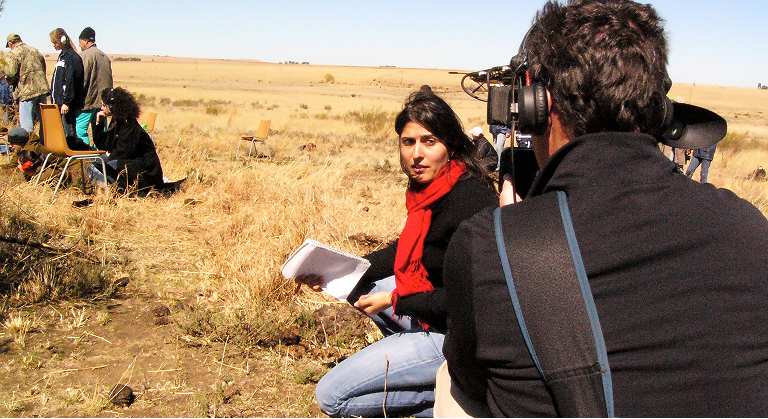
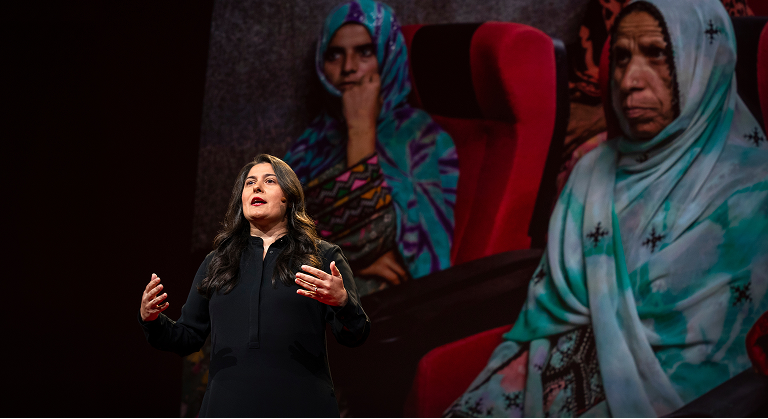
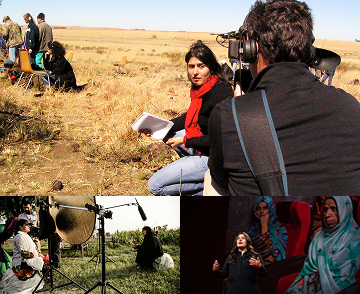
Sharmeen Obaid-Chinoy is a two-time Academy Award-winning filmmaker and institution-builder whose work spans storytelling, advocacy, education and cultural preservation. For more than two decades, she has worked across countries, cultures and communities, using film not only to document the world around her, but to question it and increasingly, to build the platforms and institutions that can help shape what comes next.
2x
Academy Award Winner
7x
Emmy Award Winner
She has been named one of TIME magazine’s 100 most influential people, received Pakistan’s Hilal-e-Imtiaz, and been recognized by the World Economic Forum with its Crystal Award and by the International Center for Journalists with the Knight International Journalism Award.
At the heart of Sharmeen’s work is a persistent curiosity about power and possibility.
Who gets heard? Who has access to information? Whose experiences become part of our collective memory? Who knows what choices are available to them? And what happens when people are given the knowledge and opportunity to question what they have been taught to accept?
For Sharmeen, a story does not end when the screen goes dark. Her films have brought issues including honour killings, acid violence and discrimination against minorities into public conversation, while the work around them has extended into advocacy, education and engagement with institutions and policymakers. A Girl in the River: The Price of Forgiveness became part of a national conversation around honour killings as Pakistan moved to close the legal loophole that allowed perpetrators to escape punishment through familial forgiveness. Saving Face brought global attention to acid violence and greater visibility to the movement for legal protection and support for survivors.
Over time, Sharmeen has moved from telling stories to building platforms that enable others to tell their own.
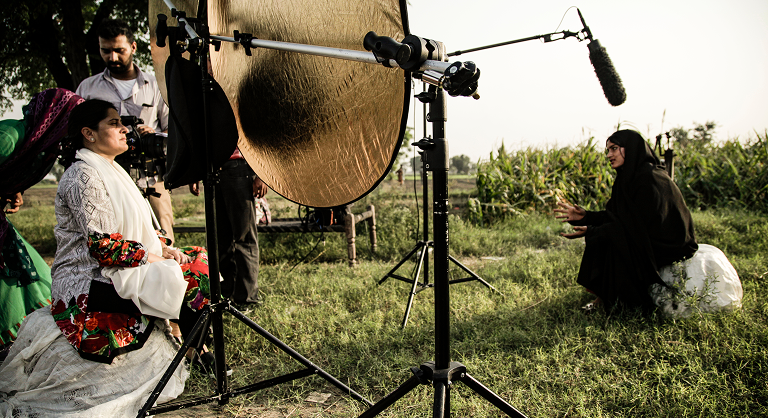
As co-founder of the Citizens Archive of Pakistan, she helped build an institution dedicated to preserving the country’s oral histories and making its history accessible to new generations. Through Patakha Pictures, she has created pathways for emerging filmmakers to access funding, mentorship, skills and professional networks. With Neela Asmaan, she has created a multidisciplinary residency in the Shigar Valley where artists and thinkers from Pakistan and around the world can experiment, exchange ideas and create.
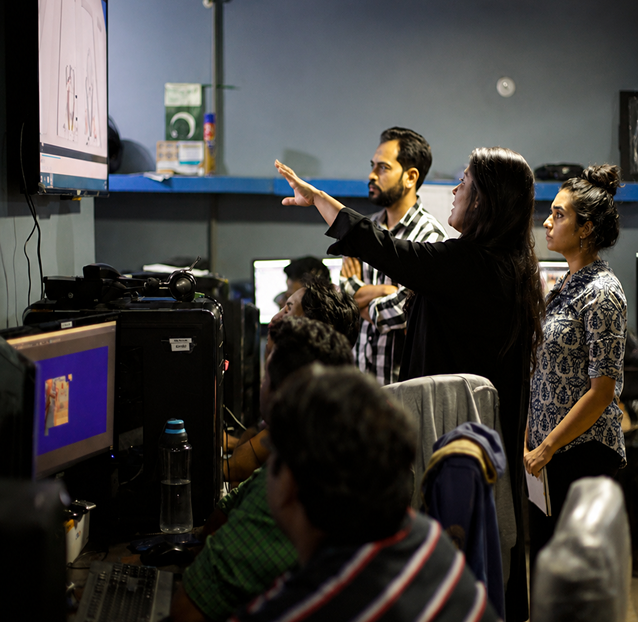
That same philosophy is driving the evolution of SOC Films. What began as a filmmaking practice has grown into a platform that creates, educates and builds, producing fiction and non-fiction for audiences around the world while expanding access to information, developing new generations of storytellers and connecting communities with institutions and decision-makers. Through its AI Lab, SOC Films is also exploring how emerging technologies can reshape how stories are created, experienced and shared.
Sharmeen’s own creative practice continues to evolve, moving between documentary and fiction, Pakistan and the international stage. For her, filmmaking, advocacy, education and institution-building are different expressions of the same idea: stories matter because they shape what we see, what we question and what we believe is possible.
And when stories create knowledge, conversation and opportunity, they can become the beginning of something much bigger.
FILMOGRAPHY
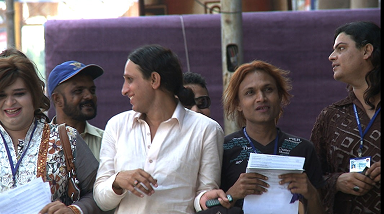
Transgenders: Pakistan’s Open Secret (2011)
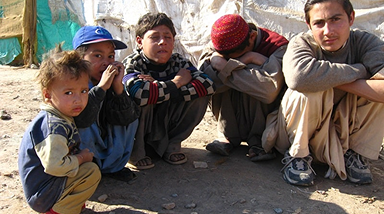
Pakistan’s Taliban Generation: Children of the Taliban (2009)
Running Time: 52 minutes
Director: Daniel Edge
Producer/Reporter: Sharmeen Obaid Chinoy
Aired on: Channel 4, PBS, Arte & CBC
Sharmeen Obaid-Chinoy investigates how the war on terror is creating a generation of child terrorists in her homeland – children prepared to kill both inside and outside Pakistan. Sharmeen travels across Pakistan to investigate how far the Taliban have* infiltrated her country. In the north, she finds the Pakistan army, backed by the Americans, locked in the deadliest conflict, killing thousands of Pakistani troops and civilians while displacing hundreds of thousands. Sharmeen meets a 14-year-old boy, already recruited by the Taliban, who describes life in one of its extremist madrassas that provide religious justification for terrorist attacks. Hazrat describes how he graduated from training in small arms to rocket launchers and explains how a suicide attack in a car could be executed.
Iraq: The Lost Generation (2008)
Running Time: 52 minutes
Director: Ed Robbins
Producer/Reporter: Sharmeen Obaid Chinoy
Filmed by: Richard Malone
Aired on: Channel 4
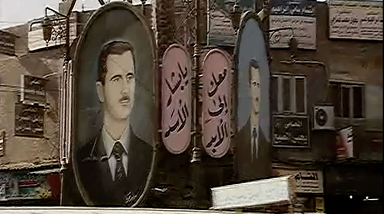
In the past five years more than four million Iraqis – 20 per cent of the entire population – have been driven from their homes as a result of the war and sectarian bloodshed. Two million have become exiles, living desperate lives across the border in Syria and Jordan. Filmmaker Sharmeen Obaid-Chinoy investigates the biggest and most catastrophic refugee crisis in the Middle East since the Palestinian diaspora of 1948. The film travels to Syria and Jordan to investigate the plight of Iraqi refugees. These are the very people on whom the new, democratic Iraq was to be built – the professional middle classes – nearly half of whom now live as desperate refugees, driven out by the violence and civil breakdown.
Lifting the Veil/ Afghanistan Unveiled (2007)
Running Time: 52 minutes
Director: Hugh Thomson
Producer/Reporter: Sharmeen Obaid Chinoy
Filmed by: Richard Malone
Aired on: Channel 4 and CNN
In this film, journalist Sharmeen Obaid-Chinoy travels to Afghanistan to find out how life has changed for women in the five years since the invasion by America and its allies and to investigate whether women have been ‘liberated’ as President Bush has claimed. Her journey takes her from the bustling city of Kabul – one vast building site full of shopping malls and warlord palaces – to Herat on the Iranian border, where suicide rates for women are shockingly high, and on to the remote rural areas in the north where Afghan life is at its most basic.
Assimilation No, Integration Yes (2006)
Running Time: 52 minutes
Director/Reporter: Sharmeen Obaid Chinoy
Filmed by: Phil Cox
Editor: Bruce Anus
Aired on: Al Jazeera International
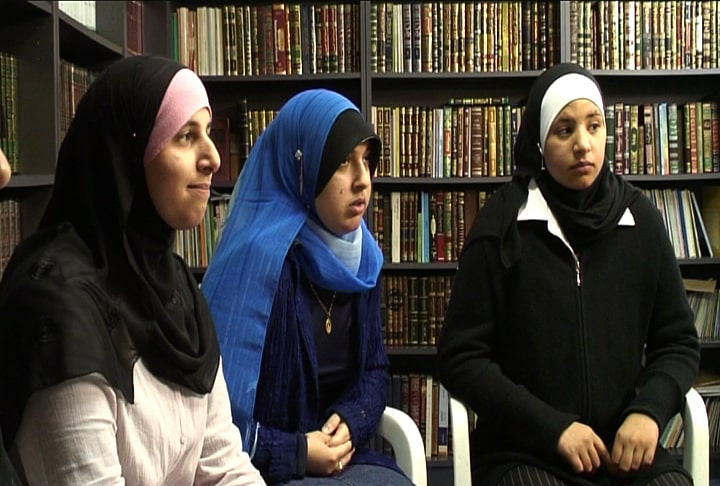
Sweden has the reputation of a wealthy, developed, post-industrial society. But beneath this seeming tranquility, lies a simmering tension between Muslim immigrants and native Swedes. Shameen Obaid-Chinoy visits the southern city of Malmo to find out how first and second-generation Muslims are integrating into their adopted homeland. In the immigrant ghetto of Rosengard, she explores a moderate Mosque under siege, young Muslims struggling to be accepted by Swedish society and an inspirational Iranian hip hop artist who is trying to address the problems of the children of Rosengard.
The New Apartheid (2006)
Running Time: 24 minutes
Producer: Robin Barnwell
Reporter: Sharmeen Obaid Chinoy
Aired on: Channel 4 and ABC Australia
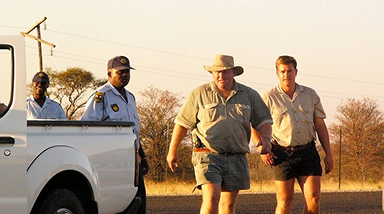
The film began in South Africa where a huge rise in illegal immigration from Zimbabwe and other African states is behind an increase in racism and xenophobic violence. Sharmeen Obaid-Chinoy journeys from the Zimbabwean border to one of Johannesburg’s most dangerous quarters to investigate. The Zimbabweans say they are fleeing a collapsing state, where President Mugabe’s policies have driven the economy into crisis and where earning enough to feed their families is impossible. However, the South Africans blame them for a crime wave and accuse them of causing unemployment.
Highway of Tears (2006)
Running Time: 24 minutes
Director/Reporter: Sharmeen Obaid Chinoy
Filmed by: Allan Code
Editor: Michael Fuller
Aired on: Al Jazeera International
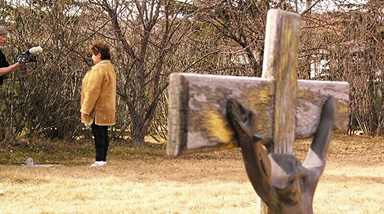
Families all along Canada’s Highway 16 – a 425-mile stretch of road that cuts through pine forests, rivers and remote Indigenous reserves in central British Columbia – are searching for their missing loved ones. The families have dubbed the road the “Highway of Tears,” and Amnesty International estimates that 32 aboriginal Canadian women have gone missing in the last three decades along the highway, which runs from Prince Rupert to Prince George. Aboriginal Canadians claim the Royal Canadian Mounted Police have made no headway in any of the cases and feel discriminated against.
Cold Comfort (2006)
Running Time: 21 minutes
Director/Reporter: Sharmeen Obaid Chinoy
Editor: Michael Fuller
Aired on: PBS Frontline
For millions of years, the Indian subcontinent has been slowly crashing into the Himalayan Mountains. The earthquake that flattened mountain villages in Pakistan, India and Kashmir on October 8, 2005, was a violent reminder of this tectonic drift. The quake registered at least a 7.6 on the Richter scale. A month later, the death toll stood at more than 87,000. By most accounts, more than 3 million people were left homeless. In the wake of the disaster, who gets help and from whom has highlighted the already heated politics of the area. Filmmaker Sharmeen Obaid-Chinoy travels by helicopter to Balakot, the epicenter of the quake. Here she takes us into the tents of women who lost their husbands and children to the earthquake. She visits makeshift clinics overwhelmed by patients, and finds a mix of medicine and religious ideology being dispensed.
City of Guilt (2006)
Running Time: 24 minutes
Producer: Robin Barnwell
Reporter: Sharmeen Obaid Chinoy
Aired on: Channel 4
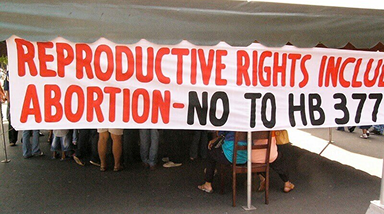
In the next 30 years the population of the Philippines is set to double to 170 million. Contraceptives are frowned upon and abortion is illegal but every year more than half a million Filipina women are so desperate they undergo harrowing illegal abortions, despite the fact that at least 80,000 end up seriously ill in hospital. Filmmaker Sharmeen Obaid Chinoy’s journey begins in Metro Manila, where 35% of its 12 million inhabitants live in slums. She spends time in the capital, understanding the battle being played out between the Catholic Church’s pro-life groups and women rights groups.
Women of the Holy Kingdom (2005)
Running Time: 42 minutes
Producer: Sharmeen Obaid Chinoy and Maiken Baird
Reporter: Sharmeen Obaid Chinoy
Editor: Jay Keuper
Aired on: Discovery Times Channel & ABC Australia
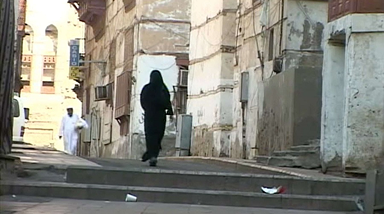
In Saudi Arabia, women need permission from their male guardians to study, work and travel. They are also forbidden to drive and to mix with men in public. Now, a growing number of Saudi women are challenging these traditions and are clamoring for more rights, filmmaker Sharmeen Obaid Chinoy documents the emerging women’s movement. She also interviews religious clerics and young working mothers who denounce change and label the women’s movement as immoral.
On a Razors Edge (2004)
Running Time: 24 minutes
Producer: Ed Robbins
Producer/Reporter: Sharmeen Obaid
Aired on: PBS Frontline
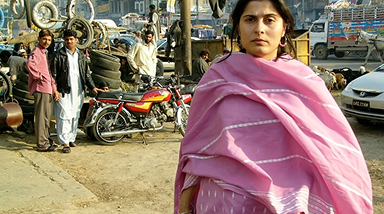
Spring has arrived in Pakistan, and the season has brought a thaw in the Cold War between Pakistan and India, bitter enemies for more than 50 years. A train is now allowed to cross the border. Filmmaker Sharmeen Obaid Chinoy boards this “peace train” in India and travels home to Pakistan to see how people are reacting to the cautious attempts to settle differences between the two countries. She describes Pakistan as “a country of secrets and paradoxes, still emerging from its recent past, before 9/11, when it was the Taliban’s main supporter.” She knows that her country is “determined to be part of the modern world,” but finds itself at a “dangerous crossroads.”
Terrors Children (2002)
Running Time: 45 minutes
Producer/Reporter: Sharmeen Obaid
Producer/Editor: Jay Keuper
Producer: Mo Naqvi
Aired on: Discovery Times Channel
Terror’s Children is a personal journey of a Pakistani filmmaker Sharmeen Obaid Chinoy. For ten weeks in the summer of 2002, she followed the lives of eight Afghan refugee children in the city of Karachi, who had been forced to flee their war-ravaged homes in Afghanistan, often alone, to face hunger, disease, illiteracy, servitude and even forced militancy. While many of these children live in the Afghan refugee camp, some also live in illegal encroachments near garbage dumps and become scavengers who sell paper and bottles that they have collected by sifting through trash, others find refuge in religious schools (called “madrasas”) that provide free food, shelter and clothing to young boys in exchange for their allegiance to the cause of Islam.